
Most popular
- The Great Imperial Crown – the masterpiece of the russian jewellery art presented in Moscow
- Alrosa Produces 7.5 Mln Carats in Q1, Sales Up to $1.22 Bln
- Jewellery retail has grown by 19 % in 2011
- Moscow Bourse Bringing Buyers to Diamond Week in Israel
- Russia: What the Buyer Economizes on and How He Puts on the Ritz
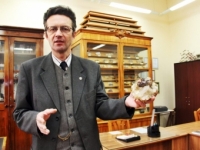
A new brand "Kazan brilliants" can appear in a short time in Tatarstan. The associate professor of Mineralogy and Petrography of Geological Institute Oleg Lopatin and a senior research assistant of the laboratory "Radiation physics" of KPTI Rustem Haybullin learned to turn usual minerals into jewels, increasing their cost in hundreds times at the expense of coloration in fashionable colors.
The idea to color minerals struck Oleg Lopatin and his former schoolmate Rustem Haybullin during a friendly meeting in one of the Kazan cafes.
«Its implementation took long 15 years, - remembers Oleg Nikolaevich, - we began with production of rubies. Took pure oxide of aluminum on a ruble for one ton, irradiated it in the accelerator and at the output we received rubies and sapphires. In a real environment minerals are formed for million years, we learned to create them in 10-15 minutes! And no one expertize doubt authenticity of our jewels».
But fantastic results were achieved by the scientists during processing of diamonds. It is known that color diamonds can be found extremely rarely (a million to one) and they are very appreciated at the market of jewels: the cost of one carat can reach one million dollars. And prime cost of the Kazan brilliant is equal to the cost of the expended electricity and used materials.
«While we learned to color diamonds in gold and black colors, - tells Oleg Lopatin. - At the moment we work at the creation of polychromatic brilliants that is we want to color a stone in some colors at once. For example, the upper part of the brilliant will be blue, and the lower one— red».